The Journey of Pro Triathlete Leana Bissig: From Uni to T100 Racing
- #podcast
- #triathlon
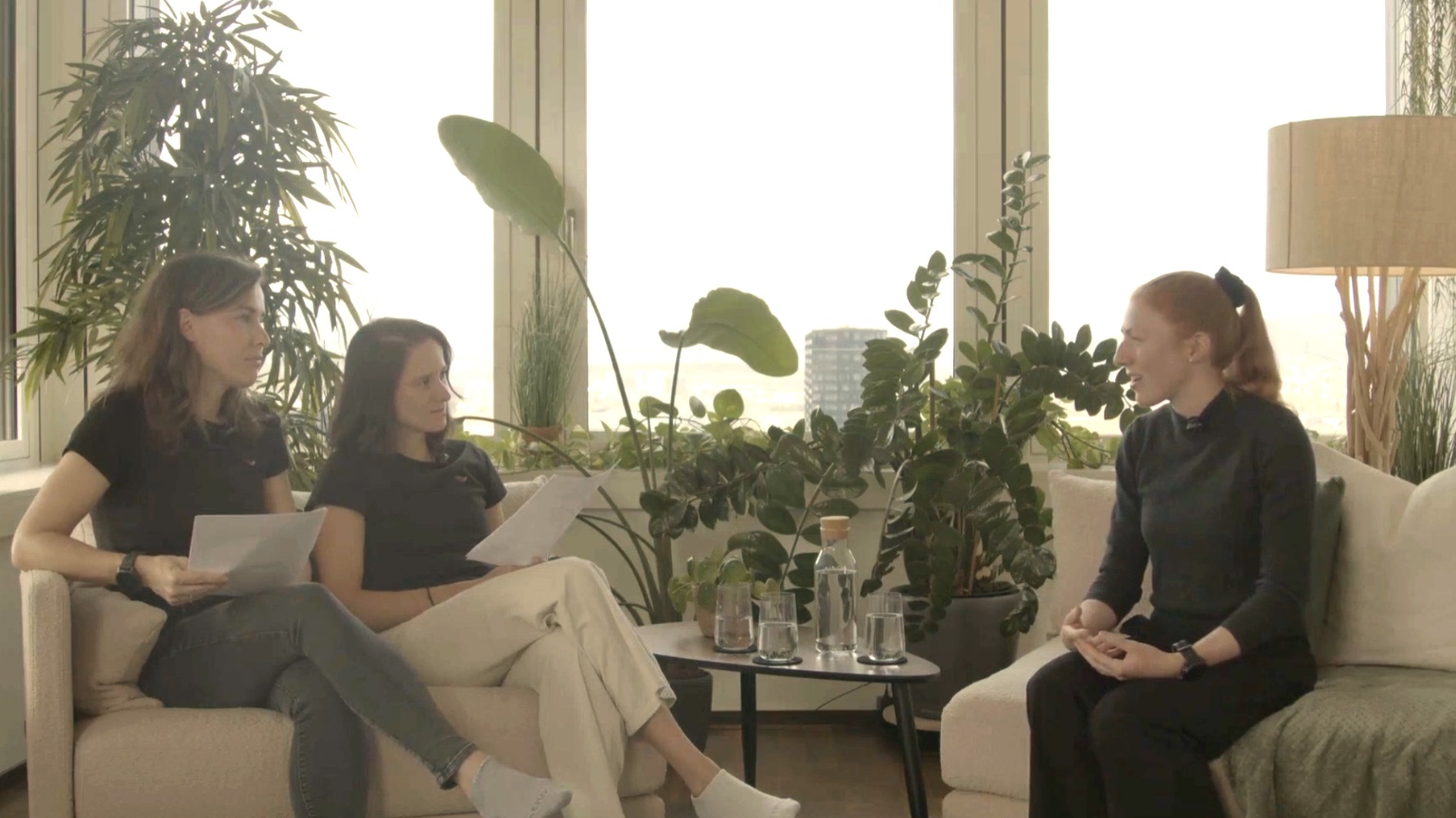
Hey there endurance enthusiasts,
Last week we released a new episode of the Human Endurance Podcast.
This time we sat down with Leana Bissig, a Swiss professional triathlete who’s competing at the T100 level while working in tech. Current World Ranked #39, she recently finished 22nd at the 2025 Qatar T100 Triathlon World Championship Final and 7th at T100 Wollongong, all while managing a demanding career alongside her athletic pursuits. We wanted to understand how she balances elite performance with real-world responsibilities and what her journey from short course to middle distance can teach us about sustainable progression.
Below are the insights she shared with us during this conversation. Enjoy!
Balancing Elite Sport with Career & Education
The most striking thing about Leana’s story is that she’s not a full-time athlete.
“I’m working with numbers, with data... We are around 30 people, so we know each other, we know our strengths and they know that I work five days a week, but I can split them. It’s a lot of remote work, so I’m available a lot, but I can also train in between.”
Before going pro, she completed a Master’s in Health Sciences at ETH Zurich—one of the most demanding universities in Europe—while training around 20 hours per week as a junior athlete.
“The five years when I was studying, they were demanding, but I think they also helped me to gradually increase the mileage, to gradually build my endurance base and get better at it.”
She acknowledges the mental benefits of having something beyond sport: “It also helped to have something on the side, to have a perspective, because elite sports is not forever and I like to use my brain and think in other areas.”
But there’s a trade-off. When we asked if having both options reduced pressure, she was honest: “It helps to reduce pressure, but it’s also like you don’t go full in into one and see what’s possible if you do focus on just one thing.”
Her breakthrough came when she changed coaches two years ago, finished her studies, and moved to a more flexible job—finally giving her the time and structure to see what she was truly capable of.
Transition from Short Course to Middle Distance
Leana grew up watching Nicola Spirig win Olympic gold, so triathlon meant short course.
“I’ve watched the Olympics and short course was what triathlon meant to me. I know there was Hawaii and Ironman is really big, but for me, in my little world back then it was short course.”
Her first 70.3? She showed up as a pro without a TT bike.
“I did my first one back in 2021. I was underprepared for it. I also didn’t have a TT bike back then, so it was a very hard race... but I loved it.”
The training shift wasn’t about dramatically longer sessions—it was about intensity placement.
“As a short course athlete, I also ran 90 minutes for long runs, but it was usually just the easy long run to get some mileage in. Now, they don’t get much longer than 90 minutes, maybe 95 or 100 minutes, but I do build runs in it. For example, three times 20 minutes where I build the pace over the set.”
On the bike, the difference is even more pronounced: “Short course is very dynamic: when you look at the power profile, levels six and seven are very high, and level one and two also, but in the middle you barely have any power. In middle distance it’s more or less the opposite. It’s just always the same.”
She still works on speed because it’s a limiter: “I’m not the fastest, so I need to work on the speed. I still do some really short stuff like one minutes or 30 seconds to get the frequency up.”
Training Philosophy & Progression
“Endurance comes over time. Don’t see the impressive workout and try to achieve it right away, but get slowly towards it because it takes time, but you eventually get there. Consistency.”
This philosophy shows up in her injury history - or lack thereof. She’s never had a major injury.
Her approach to progression is conservative but effective. During her studies, COVID actually helped: “We had online classes and there were no races, so I just had online classes and I could train. That helped me a lot for the two or three years that came afterwards.”
She’s realistic about the limits of a long season: “This season has been very long since February, and I think I’ve never done such a long season. You cannot just do them year after year. You need to be careful because your body needs some rest eventually.”
Her off-season? Two to four weeks completely off structured training, followed by two weeks of training for fun before returning to a structured plan.
“The more seasons I have, the more off-season just gets—like I feel how long I need it to be.”
Nutrition for Female Athletes
Leana’s approach to nutrition is refreshingly simple: eat enough.
“I think it’s important to eat enough. Especially when you train so much, then it’s less what you eat, but how many calories you get in. Most people tend to not get enough calories, to slowly get into a deficiency, which can lead to RED-S.”
She doesn’t track her intake: “I usually just eat by feel, how hungry I am. And I know if I’m constantly eating, okay, good.”
For race nutrition, she takes a moderate approach: “I’m around 80-90 grams per hour, which used to be a lot back in the day, but now when people say 140 or even more... that’s not me.”
She’s pragmatic about what works for her body versus following trends, understanding that absorption matters more than consumption.
The awareness comes from her Health Sciences background at ETH, where she studied sports physiology, nutrition, and even did a project on heat adaptation. But she doesn’t overthink it: she applies the fundamentals and listens to her body.
Mental Game & Confidence Building with her Coach
Leana credits much of her recent success to her coach Jordi Meulenberg’s work on the mental side.
“He can really push me and he challenges me a lot to get better, to get the best out of me, helping me a lot on the mental side.”
When we asked how he does it, she admitted: “I don’t know how he does it completely, but it’s also the way he structures the training, confidence building over time, the way we choose races, how we discuss races after, what we learn from it.”
Her confidence journey is evident in her T100 story:
“My coach told me I was good enough for T100, but I didn’t really believe it. He was like, if you go for T100, then you have to really focus on T100. I think he just tested me, like if I was really committed to go all in.”
She took the leap. It paid off.
Leana’s Advice: Trust the Process
We asked Leana what message she’d leave for our listeners.
“Endurance comes over time, I would say. So just keep going. Don’t see the impressive workout and try to achieve it right away, but get slowly towards it because it takes time, but you eventually get there. Consistency.”
Patience. Progression. Consistency.
Not sexy, but it’s what gets results, whether you’re balancing a full-time job or chasing a podium at T100.
Listen to the Full Episode
This newsletter covers the main themes, but there’s a lot more in the full conversation:
- The specific bike training differences between drafting and non-drafting
- Her favorite training sessions (spoiler: she loves climbing)
- What it’s like racing T100 with only 20 women on the start line
- Strength training: why she does mobility/stability work but not heavy lifting
- Her upcoming season plans and the importance of a proper off-season
🎧 Listen on Spotify or Apple Podcasts
📺 Watch on YouTube
Connect with Leana
Instagram: @leanabissig
Connect with us
Instagram: @justbrunathings, @endurance_fabi
🏃 augo: www.augotraining.com | @augo.training
🚴 Jornada Endurance: www.jornadaendurance.com
Originally published on Substack. Subscribe there to get new posts by email.
Listen to the full episode
The journey of Pro Triathlete Leana Bissig - From University to T100 racing