A Practical Guide to Fueling for Performance with Danielle de Francesco
- #podcast
- #nutrition
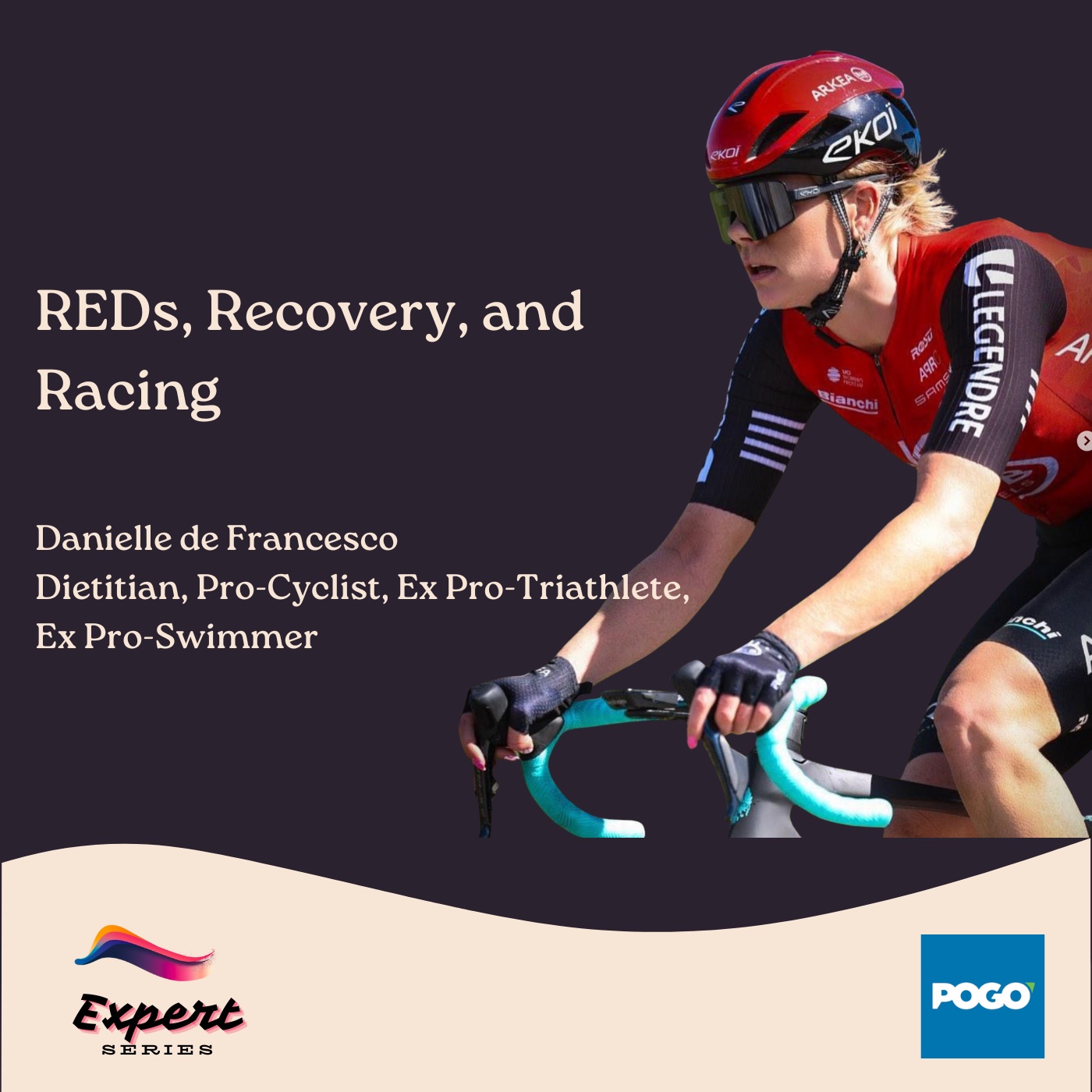
In our latest episode, we had the privilege of speaking with Dani, whose journey from world-class swimmer to professional cyclist reads like a masterclass in the power of proper nutrition. Having competed at 4 World Championships and 2 Pan Pacific Games as a swimmer, you'd think Dani had figured out the performance puzzle. But her story reveals a different truth—one that too many endurance athletes learn the hard way.
The Wake-Up Call: When "Leaner Equals Faster" Backfires
Dani's athletic career was marked by incredible highs and devastating lows. Despite her elite-level achievements, she found herself caught in a cycle of:
- Getting sick every second month as a swimmer
- Struggling to back up training sessions
- Suffering multiple tibial stress fractures in triathlon
- Constant fatigue that coaches attributed to "not trying hard enough"
The culprit? A deeply ingrained belief that "leaner equals faster"—a mentality she describes as prevalent in the "old school" swimming environment.
The reality check: Dani's injuries and illnesses weren't signs of overtraining. They were her body's desperate signals that she wasn't providing enough fuel to support both her intense training load and basic physiological functions.
Understanding REDs: The Silent Performance Killer
One of the most eye-opening parts of our conversation centered on REDs (Relative Energy Deficiency in Sport)—a condition where athletes don't consume enough calories to support both training and basic body functions.
The Warning Signs:
- For women: Irregular or absent menstrual cycles
- For men: Fewer than 5 morning erections per week
- Hormone imbalances
- Poor recovery and performance
- Recurring illnesses and injuries
- Persistent fatigue
- Slowed bone turnover
The Scary Truth About Timing:
REDs can develop in just a few weeks. If you're under-fueling by 500 calories daily, that deficit compounds quickly—reaching thousands of calories per week.
REDs can develop in just a few weeks. If you're under-fueling by 500 calories daily, that deficit compounds quickly—reaching thousands of calories per week.
Dani's insight: "A lot of athletes just think they're tired from their training, and then it just becomes the norm. But it's really your body giving you these signs that I need some more fuel."
The Transformation: Fueling for Performance
Since properly fueling her body, Dani has experienced:
- Regular menstrual cycles
- Improved power numbers in cycling
- Ability to back up training sessions consistently
- Energy for life outside of training
- Zero injuries while cycling
Her current approach as a professional cyclist training 17-20 hours per week? 4,500-5,000 calories on longer training days.
Practical Nutrition Strategies That Actually Work
Pre-Training Fuel:
- Low intensity (30 min): 45g carbohydrates
- High intensity or longer sessions: 1g carbohydrates per kg body weight
- Timing matters: Always fuel before training—especially important for female athletes
During Training:
- Sessions under 2.5 hours: 30-60g carbs per hour
- Sessions over 3 hours: 60-90g carbs per hour
- Race day: Some athletes go up to 120g per hour (individual tolerance varies)
Post-Training Recovery:
- Protein: 20-30g immediately after training
- Carbohydrates: At least your body weight in grams (60kg athlete = 60g carbs)
- Timing: As soon as possible—the longer you wait, the longer your body stays in a catabolic state
Pro tip from Dani: "I typically struggle with eating when I get home, so that's why I have the smoothie. It's a lot easier to get the liquids in when you've done a big session rather than having to eat a big meal."
Debunking Common Nutrition Myths
Myth 1: Carb Loading Means Pasta Week
Reality: 2-3 days for ultra events, just the day before for shorter races. Target: 8-10g carbs per kg body weight.
Myth 2: Fasted Training Builds Fat Adaptation
Reality: Not recommended for female athletes due to hormonal differences. "We become in sort of this stress state if we don't feed our body any carbohydrates, so our cortisol levels will rise."
Myth 3: Weight Gain From Proper Fueling Hurts Performance
Reality: "Much better to be fueling a little bit more, gain a little bit more weight than be on the sideline for three to six months with a bone stress or illness."
Myth 4: You Can Get Everything From Food Alone
Reality: Supplements have their place, especially for specific deficiencies or dietary restrictions. Blood work is key to determining actual needs.
The GI Distress Solution
Struggling with stomach issues during training or racing? Dani's troubleshooting approach:
- Start with the source: Often too much fuel or wrong type of carbohydrates
- Watch for fructose intolerance: Common in gels and sports products
- Train your nutrition: Can take up to 20 sessions to adapt to a new product
- Check your pre-race meal: High fiber or high fat foods can cause issues
- Build gradually: Don't jump to 90g carbs per hour immediately
Age and Gender Considerations
For female athletes: Nutrition needs differ significantly from males due to hormonal differences. Never train fasted—even a banana is better than nothing.
For masters athletes: Carbohydrate requirements during training remain the same, but overall calorie needs may be slightly lower due to slower metabolism.
For recreational athletes: Guidelines remain largely the same, but individual goals (like weight loss) may require modifications. "It's not one size fits all," Dani emphasizes.
The Bottom Line: Food Is Fuel
After an hour of conversation packed with science-backed insights and hard-won wisdom, Dani's final message was beautifully simple:
"Food is fuel. It's like petrol to a car. It doesn't run without the fuel. You can put all your effort into your training, but your adaptations happen after training with your food and your recovery."
Her transformation from a constantly injured, frequently ill athlete to a thriving professional cyclist serves as a powerful reminder that sometimes the most important training happens at the dinner table.
Key Action Items:
- Assess your energy availability: Are you experiencing any REDs symptoms?
- Never train fasted: Especially if you're female—even 45g carbs makes a difference
- Fuel during sessions over 45 minutes: Your glycogen stores start running empty around the hour mark
- Prioritize post-training nutrition: Protein and carbs within 30 minutes
- Get blood work: Know your baseline before supplementing
- Train your race nutrition: Start practicing your fueling strategy now
Connect With Dani
Book an appointment with Dani or follow her on Instagram @danny.de.dietician for evidence-based nutrition tips and behind-the-scenes glimpses of professional cycling.
Want to dive deeper into this conversation? Listen to the full episode on Spotify, Apple Podcasts, or wherever you get your podcasts. And if you found this post helpful, share it with a fellow athlete who might benefit from rethinking their relationship with food and fuel.
Originally published on Substack. Subscribe there to get new posts by email.
Listen to the full episode
RED-S, Recovery, and Racing: A Practical Guide to Fueling for Performance with a Dietitian, Pro-Cyclist, Ex Pro-Triathlete & Ex Pro-Swimmer