From Marathon to Ultra: What Jazmine Lowther Taught Us About Making the Leap
- #podcast
- #ultrarunning
- #running
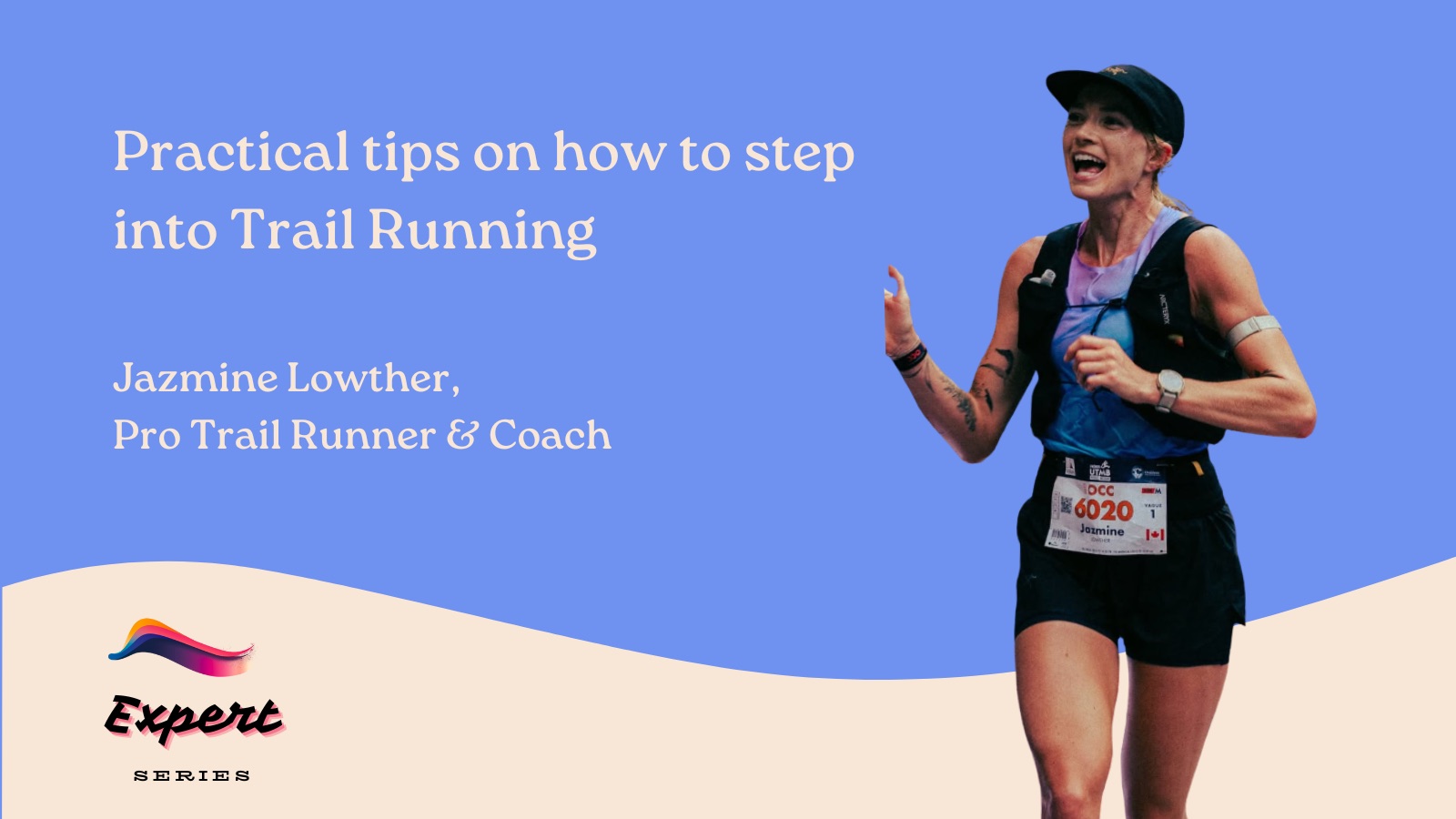
Jazmine isn't just a professional ultra runner; she's someone who just placed ninth at the OCC by UTMB and holds course records that make your head spin. But what made this episode special wasn't just her achievements - it was how she broke down the science and art of ultra running in a way that actually makes sense for those of us thinking about going longer.
If you've been running marathons and wondering what it takes to step into the ultra world, this one's for you.
"Everyone can be an endurance athlete, no matter where you're coming from. You just gotta enjoy it." - Jazmine Lowther
Why RPE is king at Ultras
One of the first things Jazmine explained was why ultra runners seem to speak a different language when it comes to training. While marathoners live and die by their pace per kilometer, ultra runners? Not so much.
"Pace on trail becomes a bit murky," Jazmine explained. Between vertical gain, technical terrain, rocks, roots, and altitude, your typical 5:00/km on the road might translate to something completely different on the trail. That's where Rate of Perceived Exertion (RPE) comes in - essentially, how hard something feels on a scale of 1-10.
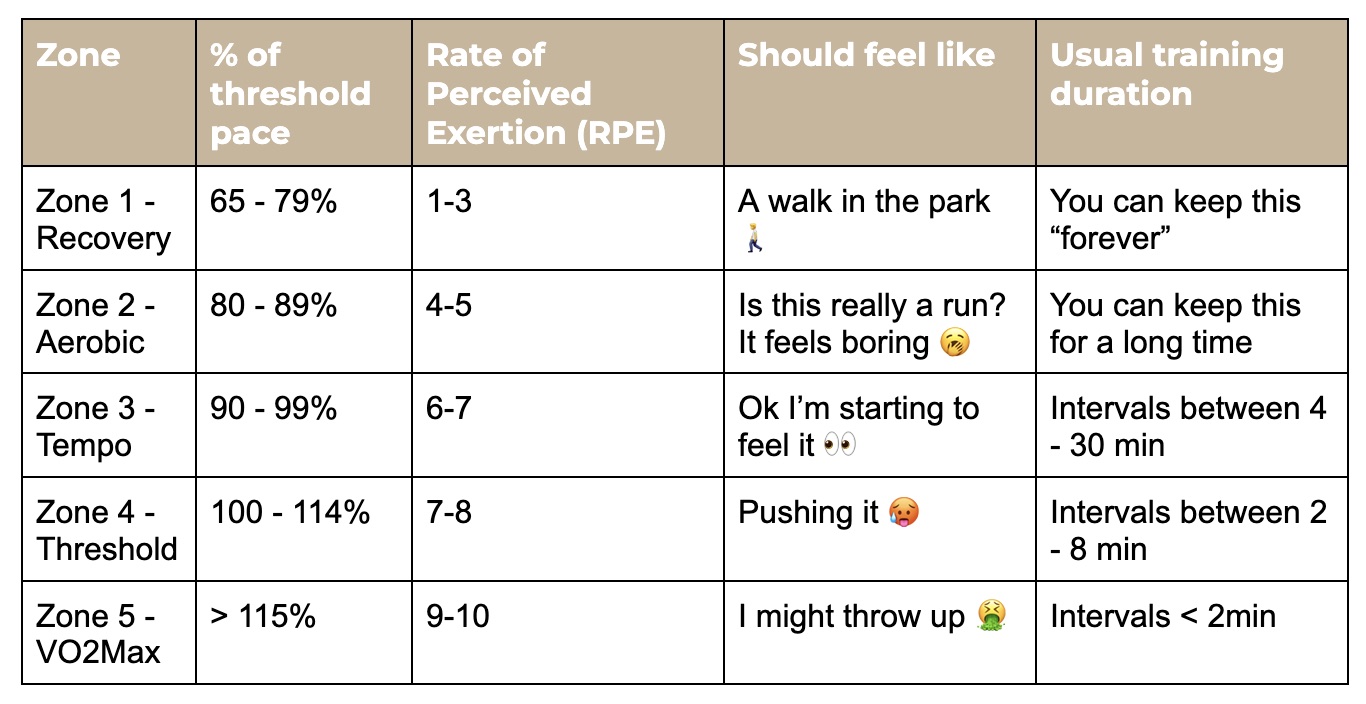
RPE explanation that Fabi and Bruna use with athletes they coach
For Jazmine, a 4-5 on that scale is your zone two, aerobic effort. Six to seven? That's tempo territory. Nine? You're in the red, pushing anaerobic threshold. It's a system that translates across any terrain, any condition, any day.
The Volume Question: You Don't Need to Run 100K in Training
For a 100K race, Jazmine's athletes rarely run more than 40K in training. How is that possible?
The answer lies in understanding cumulative fatigue and smart periodization. Once you pass about 35 kilometers in a single run, the damage to your tissues increases exponentially. You need more recovery time, which means less consistent training overall. It's actually more beneficial to keep most long runs in that sweet spot and build fitness through consistency rather than heroic efforts that leave you recovering for a week.
"The human body can do amazingly incredible things," Jazmine told us, "definitely much more than we think." The key isn't rehearsing the full distance - it's building the durability and efficiency to handle it on race day.
Doubles, Back-to-Backs, and Other Ultra Secrets
While Jazmine rarely prescribes traditional "doubles" (two runs in one day), she's a big fan of back-to-back long efforts. Picture this: a solid long run or workout on Saturday, followed by another long effort on Sunday. Your legs are already fatigued from day one, so day two becomes about building that mental and physical durability you'll need late in an ultra.
"Power hiking is just really gentle on the body. You're not pounding your joints so much." - Jazmine Lowther
Speaking of building durability - here's a training hack Jazmine loves: the power hiking day. After your long run, when your legs are tired but you still want to add training stimulus, head out for an intentional, fast-paced hike. You're still passing regular hikers on the trail, but you're saving your joints while building specific strength for those long climbs.
Fueling: The Liquid Advantage
When it comes to race nutrition, Jazmine had some controversial takes. While we often see ultra runners eating noodles and potatoes at aid stations, she's moved toward a primarily liquid fueling strategy, especially for shorter ultras (if you can call a 50K "short").
Her reasoning? Liquid calories absorb faster and cause less GI distress when you're pushing hard. She aims for around 90-100 grams of carbs per hour during racing - mostly through drink mixes and gels, with watermelon and potatoes as her go-to solid foods when needed.
The key is starting your gut training months out. Every long run over 90 minutes becomes an opportunity to practice your race fueling strategy. Start at 60 grams per hour if you're new to it, then gradually build up week by week.
Training the Mind: The Games We Play
Ultra running is as much mental as physical, and Jazmine has developed a toolkit of "mind games" she teaches her athletes. One technique that stood out was attention switching - learning to toggle between internal focus (how does my chest feel?) and external focus (what color are those flowers?).
When discomfort creeps in during a race, having practiced this skill means you can shift your attention outward and find that flow state we all chase.
The Women's Training Difference
As both a female athlete and coach, Jazmine brought important insights about training differences between men and women. It's not just about adjusting volume or intensity - it's about understanding that women often respond better to understanding the "why" behind their training.
Women should pay extra attention to changes in their menstrual cycle as a key health indicator. Lost periods or irregular cycles? That's your body waving a red flag about energy availability. Jazmine emphasized the importance of strength training for female athletes, especially heavy lifting for bone density, and the critical need for VO2 max work as women approach menopause.
"As women, we have signals that are actually quite conspicuous if things are not going well." - Jazmine Lowther
Your Ultra Transition Checklist
If you're thinking about making the jump from road marathons to trail ultras, here's what Jazmine says you need:
- A solid aerobic base - If you've been running marathons, you've got this
- Time on feet - Start adding hiking to your weekly routine
- Hill training - Both up and down (practice that downhill technique!)
- Nutrition practice - Start training your gut now, not race week
- Mental strategies - Develop your toolkit for when things get tough
- Patience - Give yourself at least six months for your first ultra
The Bottom Line
After talking with Jazmine, I'm convinced that the leap from marathon to ultra isn't as huge as it seems. Yes, there are new skills to learn - reading terrain, managing effort by feel, fueling for longer efforts. But if you've run a marathon, you've already proven you can do hard things.
The ultra world isn't about being tougher or more hardcore. It's about being smarter with your training, more in tune with your body, and finding sustainable ways to go longer. As Jazmine reminded us, it's a privilege to be able to run. Once you remember that, even the longest distances become possible.
Want to hear the full conversation with Jazmine? Listen to the complete episode of the Human Endurance Podcast [here].
You can find Jazmine on Instagram [@jazmine_lowther] and learn more about her coaching at [www.jazminelowther.com].
Have questions about transitioning to ultra running? Drop them in the comments below - we'd love to hear about your endurance journey.
Originally published on Substack. Subscribe there to get new posts by email.
Listen to the full episode
Practical tips on how to step into Trail Running